
Functional Medicine EMR: What to Look For in 2026
Specialty labs, supplement dispensing and cash-pay billing are what break first on a conventional EMR. What functional practices should look for.
A functional medicine EMR has to do three things a conventional one does not: order and receive specialty labs inside the chart, let you recommend supplements the patient can actually buy, and bill by membership or package rather than by claim. Everything else — templates, scheduling, messaging — matters, but those three are what break first when a functional practice runs on software built for insurance-based visits.
This guide covers what to look for, how the main platforms differ, and where SigmaMD fits.
Why conventional EMRs break for functional medicine
The mismatch is structural rather than cosmetic. A conventional EMR is organised around producing a defensible, codable record of a short visit. Functional medicine is organised around a long arc: a detailed intake, a panel of specialty tests, a protocol that changes over months, and a supplement plan the patient follows between visits.
| What functional practices need | Why conventional EMRs struggle |
|---|---|
| Specialty lab ordering and results in the chart | Built around a standard compendium; specialty panels often arrive as loose PDFs |
| Supplement recommendations patients can act on | No dispensary concept at all — it lives in a separate tab or a separate product |
| Long-visit, timeline-style documentation | Templates optimise for a coded 15-minute visit |
| Cash-pay, membership and package billing | Billing assumes a claim; memberships get bolted on |
| In-house dispensing with lot and expiry tracking | Inventory is usually an add-on or absent |
Specialty labs, ordered and resulted in the chart
This is usually the first thing to check, and the answer is specific to your panels rather than general. SigmaMD supports direct electronic integrations with a long list of diagnostic providers — including Genova Diagnostics, Access Medical Labs, Boston Heart, Quest and Labcorp — so orders are placed and results return inside the patient chart rather than arriving as loose PDFs.
Coverage is not universal, and it is worth checking your own panels against the current list of providers available for electronic integration before you commit to any platform. Where a provider is not electronically integrated, ordering still works — the results simply arrive the way they do today.
Supplement dispensing through Fullscript

SigmaMD integrates directly with Fullscript, the dispensary most functional and integrative practices already use. Each clinician connects their own Fullscript account once under Personal Settings, and from then on the dispensary opens from inside the patient chart — you build the supplement plan and send it to the patient without leaving SigmaMD.
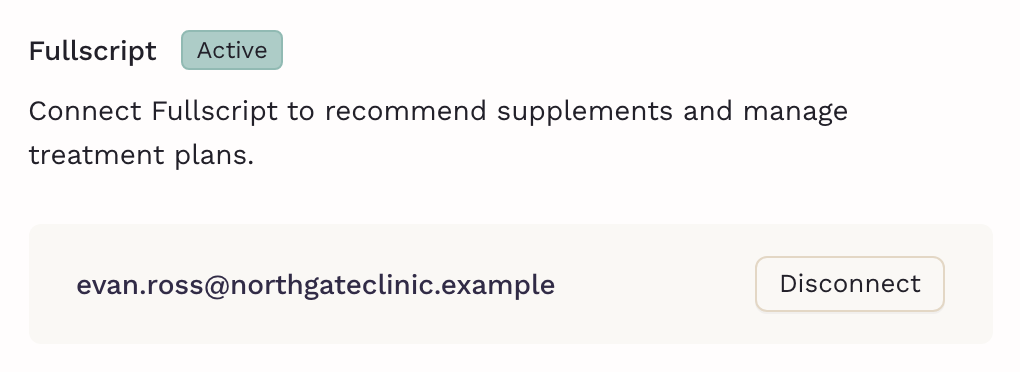
The practical difference is that the supplement plan is part of the visit rather than a second system you switch to afterwards. Full setup steps are in the help centre guide to ordering supplements with Fullscript.
In-house dispensing and inventory
Practices that dispense on site need more than a prescription pad. SigmaMD tracks inventory with lot numbers and expiry dates, prints bottle labels and medication guides, and ties each dispense to billing and the patient record. The dispensing overview covers the full workflow.
Cash-pay, membership and package billing
Most functional practices are not paid by claims. They are paid by membership, by package, or per visit — often all three for different patients. That has to be native, because the alternative is a payments product bolted alongside the chart, with two records of the same patient and a reconciliation job nobody wants. If you have not settled your billing model yet, how to start a medical practice covers that decision, which comes before this one.
The functional medicine software landscape
The platforms functional practices most often shortlist, and what each is built around. This describes design intent rather than ranking them.
| Platform | Built around | Shape |
|---|---|---|
| SigmaMD | Physician-led functional and integrative practices billing by membership or visit, with labs, dispensing and billing in the chart | All-in-one EMR |
| Cerbo | Cash-pay integrative clinics with inventory and lab tracking | All-in-one EMR |
| OptiMantra | Multi-provider integrative practices needing deep customisation | All-in-one EMR |
| Practice Better | Nutrition, health-coaching and client-engagement practices | Practice management |
| Healthie | Telehealth-heavy nutrition and wellness teams | Practice management |
| CharmHealth | Small integrative practices wanting flexible templates | All-in-one EMR |
The shape column is the distinction that matters and the one hardest to see in a demo. A practice-management platform is built around the client relationship and adds clinical documentation; an EMR is built around the chart and adds commerce. Nutrition and coaching practices are often better served by the former. A physician-led practice prescribing, dispensing and ordering labs generally is not.
What to test before you commit
- Order one of your actual panels, end to end, and see where the result lands. Not a demo panel — the one you order weekly.
- Build a real supplement plan and watch what the patient receives.
- Chart a full-length visit, timed. Long-visit documentation is where template libraries either help or get in the way.
- Ask how your data leaves — format, cost, and whether attachments and messages come with it. Ask before signing.
Where SigmaMD fits
SigmaMD is an all-in-one EMR for physician-led functional, integrative and membership practices: charting, the patient app, specialty lab ordering, Fullscript supplement plans, in-house dispensing, memberships and billing in one system rather than four.
When you’re ready, schedule a demo and we’ll walk through it with your own panels and protocols.
Frequently asked questions
What is the best EMR for functional medicine practices?
There is no single best one, and the honest split is between platforms built around the client relationship and platforms built around the chart. Nutrition and coaching practices tend to fit the first. Physician-led practices that prescribe, dispense and order specialty labs tend to need the second. Decide which you are before comparing features.
Does SigmaMD integrate with Fullscript?
Yes. Each clinician connects their own Fullscript account under Personal Settings, then builds and sends supplement plans from inside the patient chart.
Which specialty labs can I order through the EMR?
SigmaMD holds direct electronic integrations with a long list of diagnostic providers, including Genova Diagnostics, Access Medical Labs, Boston Heart, Quest and Labcorp. Coverage varies by provider and by whether they support electronic ordering, results, or both — check your own panels against the current list before committing.
Will insurance pay for a functional medicine doctor?
Usually not for the functional-medicine work itself. Specialty panels, extended visits and supplements are typically not covered, which is why most functional practices operate on membership, package or cash-pay models — and why the billing side of the software matters as much as the clinical side.
Related reading
- How to start a medical practice — the regulatory, legal and operational steps, and why the payment model decision comes first.
- Best EMR for a small practice — how billing model rather than headcount decides your shortlist.
- Choosing a direct primary care EMR — ten criteria for membership medicine, and the platforms DPC practices shortlist.
- Psychiatry EMR: what prescribers should look for — EPCS, PDMP and why most mental-health software was built for therapists rather than prescribers.
- Pediatric EMR: what independent practices should look for — growth charts on the right reference data, state registry reporting and weight-based dosing.
See SigmaMD in Action
A 30-minute walkthrough to review your workflow in SigmaMD and answer your questions.
Book a demo